Thursday, October 11, 2007

Open Letter To Our Readers


Hello Every One.
Fred G here back on the blog and welcoming everyone back for another exciting hunting season with the H7HT. The summer is past us now and fall and winter is in our sights, as well as big fat greenies. We took some time to relax, a few trips one to Mexico and another to the beautiful state of Connecticut. We got Lisa back and she is set I mean she is looking good, I want to thank the farmer for taking such good care of her. And last but not least the team had a musical interlude with one of the greatest bands ever - Lynyrd Skynyrd, amazing is all I could say. But now we are getting lets say just a little bit psyched up for this upcoming hunting season. The season could not look better. Cold nights and cool mornings have been in the forecast with some rain in the mix. Lisa is back in our life and the H7HT could not be happier. I got my gun back together and with no left over parts. Speaking of leftovers, can't wait for turkey sandwiches. And the number one reason this is going to be a great season is that Bob D. Folder can sleep in and extra 15 minutes cause I'm driving this year. Speaking of Bob D. Folder, I would like to address this "Premonition" story a few days back. Lets go over some facts here: Bob D. Folder is high. Me, Fred G, is the expert. And Lisa is just, what should I say...Lisa. Bob D. Folder always spouts at the beginning of the year of his ensuing greatness. He goes into the deep archives and pulls a picture of himself out that shows him holding the coveted 10 dollars for the first greenie and first duck of the year. Bob fails to remind everyone that in the past 4 seasons Bob D. Folder and I have split the 10 dollars, he also forgets to mention I have been the H7HT expert every year since he has taught me this great sport. And I quote from a story Bob D. Folder wrote last year "Day 23 was nothing to talk about but day 24 was killer. Fred G definitely takes the title of 'Expert' this year. His killing powers are nothing short of amazing. I like to think that someday I too will be as good of a folder as he is". Any way welcome back all, stay tuned for some great stories, pictures and new this year videos. It's going to be GREAT!

Fred G.

Lisa

CHECK

Monday, October 08, 2007

OVER?

OVER


Premonition


Exactly one week from today I expect to see this very same scene happening. It is a picture of me displaying the $10 I won (and will win again) from Fred G for folding the first duck of the season. Yep, it'll be a greenie too. Stay tuned for the updated picture.
GBCH

History Of Our Hunting Spots

Describing the areas between Gary Island (the old old spot) and Sauvies Island

From the Journals of Lewis and Clark ...

Clark, November 4, 1805 ...

A cloudy cool morning wind from the West we Set out at ½ past 8 oClock, one man Shannon Set out early to walk on the Island to kill Something, he joined us at the lower point with a Buck. This island is 6 miles long and near 3 miles wide thinly timbered (Tide rose last night 18 inches perpndicular at Camp) near the lower point of this diamond Island is The head of a large Island Seperated from a Small one by a narrow chanel, and both Situated nearest the Lard Side, those Islands as also the bottoms are thickly Covered with Pine &c. river wide, Country low on both Sides; on the Main Lard Shore a Short distance below the last Island we landed at a village of 25 Houses: This village contains about 200 men of the Skil-loot nation ...

at 7 miles below this village passed the upper point of a large Island nearest the Lard Side, a Small Prarie in which there is a pond opposit on the Stard. here I landed and walked on Shore, about 3 miles a fine open Prarie for about 1 mile, back of which the countrey rises gradually and wood land comencies Such as white oake, pine of different kinds, wild crabs with the taste and flavour of the common crab and Several Species of undergroth of which I am not acquainted, a few Cottonwood trees & the Ash of this countrey grow Scattered on the river bank, ... joined Capt. Lewis at a place he had landed with the party for Diner. ...
dureing the time we were at dinner those fellows Stold my pipe Tomahawk which They were Smoking with... we proceeded on


Sunday, October 07, 2007

Wednesday, October 03, 2007

Lore


Fred G. here
Bubba has no comment on hunt day 11, which is okay, so I'll fill in the details.
The HOY7HT rose at an early 4am in anticipation of another great hunt day. With Bubba picking me up promptly at 430 we were on our way, me with a belly full of bran, 100% of course, and gullet full of 3 day old coffee, and Shmubba with a classic coke. The long drive to Sauvies Island always evokes fond memories of hunts past and wishful memories of the future such as "when we win powerball were gonna..." or "were going to bag the limit today for sure". We arrive at the non-reservation check in station and got in line, we had a decent spot in the line but Bubba commented on how long the reservation line was, and yes I'll have to admit it was rather large, just like my python legs if you remember the mud story. There we sat for the next hour reading up on our identification of ducks so as to not shoot the wrong bird or shoot something out of season, because we all know we wouldn't shoot anything out of season. All though the common thread while sitting in the blind is "if a goose flys over my head I'm gonna shoot it". We all know that geese are out of season. Speaking of season as in seasoning, heres a little helpful hint: salt makes a sandwich taste better. Well the gates open and we finally get to the station to pick our blind, we arrive at the window and there was only 2 blind left, mind you there was 8 trucks behind us, they must have been PISSED. Our choicess being mudhen 16 or hunt 13. We choose hunt 13 not ever being there and looking for something new to try, plus mudhen 16 is about a mile walk in the mud, while walking in is fine walking out when you just put down a bottle of Jameson is brutal. Not to mention caring your limit in ducks. We drove to our new found hunting blind, anticipation a brewing, among other things, remember the 100% bran and three day old coffee. We unload our gear grab our new fine Italian made guns, made for Italians and people who ride Italian motorcycles. It was a small jaunt to blind 13 maybe 100 yards or so, a big lovely oak to our left and wide open waters to our right. We throw our deeks out under the big oak because it looks like a fine feeding spot for the ducks and put our HOY7HT made roto duck out to the right with a couple of feeders around it. As we are throwing the deeks out literaly hundreds of ducks are flying over our heads, but of course it was not fly time yet, but what a wonderful sight it was though. I then commented to Bob, Bubba , Shmubba or Bill what ever you call him "Gosh I wish Steve were here this week to see this, he would shit his pants for sure". If you all remember week 10 when we took SteveO to Sauvies, it was a disaster. We settle into our blind it's about 6 now crack our bottles of whikey open take a slug christen the blind have a smoke and were on our way. We wait till it's CIL (kill) time. It's now 12 o'clock we have drank half of our bottles and were out of smokes. Sure we have gotten off a few shots here and there but not much GOOD action. The birds are sketchy this time of year, it sounds like Iraq out there for gods sake. So were out of smokes like I said, bubba being the coolest guy ever said "I'll get some more smokes" I think he really needed a smoke. As he is walking back to the truck which is only 100 yards away remember, a duck flys into the blind and Fred G. folds it like Superman on laundry day. I could almost hear shmubbas discontent as he is walking back to the truck. It was a canvasback by the way, and if you were to read this years game book you would know that they are out of season. Shame, I care the mo. Bubba returns minutes later, because the store was about 200 yards away and I'm still out in the marsh looking for blasted duck I folded. Nowhere to be seen all I find is a skanky old dead duck that has been out there for god knows how long. 416 pm in the truck now riding home feeling pretty down, maybe the worst hunting day ever. Usually we see something cool, a great sunrise, some bald eagles, snow capped mountains, or we learn something new, you need a new license after January first, there is no water in the north unit, don't shoot a duck in its ass with a 3 1/2 inch shell 10 yards away and expect that you will be able to eat it, and salt makes a turkey sandwich taste that much better. Today nothing. Except now as I sit here and try to do my best to fill in for my BFF, cause he's feeling down about our hunt day, I think I did learn something...RESERVATIONS. Gold Bless America and happy holidays to you and your family's from the HOY7HT
Word.
Fred G from the West side.

More Good News

The U.S. Fish and Wildlife Service (FWS) has released its preliminary report on mid-continent breeding ducks and habitats, based on surveys conducted in May.

Overall, duck populations increased 14 percent since last year with an estimated 41.2 million breeding ducks on the surveyed area. As a result of winter snowfall and good precipitation, habitat conditions are similar or slightly improved compared to conditions in 2006.

One of the most important elements in duck breeding success is the amount of water present on the prairie breeding grounds. When the survey was conducted in May, total pond counts for the United States and Canada combined showed 7 million ponds, a 15 percent increase from last year’s estimate, and 44 percent higher than the long-term average. The mallard number is 10 percent higher than last year. An estimated 8 million mallards are on the prairies this spring, compared to last year’s estimate of 7.3 million birds. Mallard numbers are 7 percent above the long-term average.

The most positive news coming out of this year’s survey is that redheads, canvasbacks and northern shovelers are at record highs, and increases were also seen in two of three species of concern.

Pop Quiz


Which one of these small harmless creatures
is the mighty
Fred G afraid of ?

Monday, October 01, 2007

Building Blinds


The before and after shots of one of the blinds we built today. It won't be long now.

Wednesday, September 26, 2007

Monday, September 24, 2007

R.I.F.


If Oprah can have a book club, why not have the H7HT book club?

I'm sure this book contains profound wisdom and heady analytical views from the man who brought us classics like 'Cat Scratch Fever' and 'Wango Tango'. Ted has also been known to break out his bow hunting skills in the middle of his concerts. God Bless America, Charlton Heston AND Ted Nugent.

Tuesday, September 18, 2007

We're going to miss you Mr. Controversy.


MICHAEL MILSTEIN The Oregonian Staff
Two decades after the wrenching drive to save an obscure bird divided Oregonians, reshaped the economy and tore apart the political landscape, the northern spotted owl is disappearing anyway.
Even the most optimistic biologists now admit that the docile owl -- revered and reviled as the most contentious symbol the Northwest has known -- will probably never fully recover.
Intensive logging of the spotted owl's old-growth forest home threw the first punch that sent the species reeling. But the knockout blow is coming from a direction that scientists who drew up plans to save the owl didn't count on: nature itself.

The versatile and voracious barred owl is proving far more adept at getting rid of the smaller owl than the Endangered Species Act was in saving it:
Fewer than 25 spotted owls remain in British Columbia, the northern fringe of its range -- and where barred owls first moved into the West. Biologists say the best hope for Canada's spotted owls would be for zoos to capture and breed them, and perhaps someday return them to the wild.

Spotted owls are vanishing inside Olympic National Park, where logging never disturbed them. A biologist looking for them says it sometimes seems like searching for the long-lost ivory-billed woodpecker. Barred owl numbers, though, are "through the roof."
Researchers fitting owls with radio transmitters and tracking them west of Eugene are finding more barred owls in Oregon's woods than anyone realized. A few decades ago, no barred owls existed there; now they outnumber spotted owls more than 2-to-1.

"It looks like we may have really underestimated the number of barred owls," says David Wiens, a leader of the study based at Oregon State University.
Eric Forsman, a U.S. Forest Service biologist whose pioneering research put the spotted owl on the map, is helping oversee the study with Wiens. "I think we're going to be depressed when it's all over," Forsman says.

The spotted owl was not the only reason for protecting Northwest forests, but it was the trigger. With its dependence on towering old trees, the owl brought the Endangered Species Act into play during the logging boom of the 1980s. Judges finally put a stop to the cutting that threatened it.

Monday, September 17, 2007

Friday, September 14, 2007

Fall news

Leaves are turning colors, most prominently first those on drying weeds and shrubs up to the stature of brilliant red staghorn sumac.

In no time, we'll be tramping the fields and woods hunting for small game, with that tell-tale rustle of dried grasses and leaves underfoot and nature's brilliant tapestry overhead.
The season opens Oct. 13, and all signs point to a year of great opportunity. Last winter was relatively mild, with only a nasty month-long spurt of dismal weather at the end. The spring breeding season for ground nesters like ruffed grouse and wild turkeys appears to have been very good.
"I can't seem to go in the field without seeing a turkey," DEC small game and waterfowl maven Bryan Swift said.
That's been my experience as well. While it's strictly anecdotal, with the official August wild turkey census count still being tabulated, first impressions are that we have a lot of new birds out there. The survival rate appears excellent. I've seen a number of young this year and their protective moms picking at mature seeds and scrambling for grasshoppers, which -- with a little help from a mild winter ahead -- should translate into great hunting for year-old jakes next spring.
But we get ahead of ourselves. According to the annual flight forecast from Ducks Unlimited, we are looking at above-average numbers scooting down the Atlantic flyway for all species except for pintail and scaup.
For the first time in 20 years we can harvest up to two canvasback ducks in the daily six-bird limit. That's a duck that's shown a remarkable comeback, flying at us from the Midwest instead of following the usual duck route out of the Canadian Maritimes.

Mallards are still the gold standard of duck hunting, and their prodigious numbers are not dimmed, which is great news. Wood ducks are rife as well, to the point that there's talk of raising the bag limit on them next year. Black duck numbers are still a tad fragile, but teal populations are healthy for both green and blue-winged. Nothing tops a teal breast sauteed this fast, zip, zip.

While the overall duck population is well above average at the moment, Swift says there's the beginning of discussion in the Atlantic flyway council that maybe seasons need to be tightened a little and bag limits dropped.
The thinking is that with a little tighter regulation we might be able to keep the population numbers on a more even keel with fewer wild swings.
From the timesunion.com

Guest editor


HA! It is I, Greenie, and I rule!


I see that you worthless hunters are getting ready for yet another disappointing season of frustration. Remember that this is the only angle of me you will see this year, my French Canadian ass as it easily flies away from your inept shooting skills. I have fortified myself by eating only the finest grains and forage this season and expanded my family to replace the members you murdered last year. Jaque' and Renee did not die in vain. Their offspring are healthy and ready to fly past you and your worthless Italian guns. So sit in your poorly concealed 'blinds' and eat your stinking ham sandwich while I taunt you with my superiority. I quack in your general direction.


HA! I am Greenie, and I RULE!

Wednesday, September 12, 2007

Wild Turkeys & Babies In Mom's Yard.


Mmmmmm, Turkey. She counted 16 total.
GBCH

Thursday, September 06, 2007

Tuesday, September 04, 2007

Getting To Know You


Latin: Anas platyrhynchos

Average length: M 24.7", F 23"

Average weight: M 2.7 lbs., F 2.4 lbs.

Description: The mallard is one of the most recognized of all ducks and is the ancestor of several domestic breeds. Its wide range has given rise to several distinct populations. Male: The male mallard's white neck-ring separates the green head from the chestnut-brown chest, contrasts with the gray sides, brownish back, black rump, and black upper- and undertail coverts. The speculum is violet-blue bordered by black and white and the outer tail feathers are white. The bill is yellow to yellowish-green and the legs and feet are coral-red. Male utters a soft, rasping kreep. Female: The female mallard is a mottled brownish color and has a violet speculum bordered by black and white. The crown of the head is dark brown with a dark brown stripe running through the eye. The remainder of the head is lighter brown than the upper body. The bill is orange splotched with brown and the legs and feet are orange. Female is especially vocal with the characteristic series of quacks.

Thursday, August 30, 2007

Trust me for once, will you?

http://www.cnettv.com/9742-1_53-15308.html

Lisa?

After an exhaustive search of farms across the Pacific Northwest the HOY7 hunting team finally found her.

She left us to haul puppies and bales of hay on a thousand acre duck farm. It seems she did such a good job that the jolly old gentleman farmer (who was also a retired NASCAR pit chief and master mechanic) decided to restore her to her former glory. He started with a new 390ci plant, 9" rear and a four speed tranny with a stump puller low. Next he moved to the body where he lovingly filled and smoothed all the imperfections. New white paint and a topper finished the outside while a new blue interior complimented the color scheme. As a finishing touch the farmer installed some cab lights so that she would be easily found among all the lesser trucks surrounding her.

The farmer continued to treat her well but he knew in his mind that he could not provide her with what she truly needed. With a sadness in his heart he put her up for sale in hopes that the right people would come along. Yesterday he found those people.

With duck season approaching and the faithful GMC gone, the HOY7 hunting team knew we had our work cut out for us. How to replace the GMC (that never lived up to Lisa standards) and find something worthy of our exploits. We knew at the time that we were doing what was best for Lise but always felt the void she left. It started with VIN searches and endless hours driving the back roads. Cautious questions to local farmers. Sometimes a glimpse from the corner of your eye. Was that her? Do you think she's OK?

Then days ago as we felt the morning chill of fall in the air, something changed. At first it was just a feeling but then stronger until it was almost certain. She was looking for us too. Yesterday we spent the day on the backroads, looking, watching. From Estacada to Washington State we looked and hoped and crossed our fingers. Then, driving down a country road, we saw her. She looked different at first with her fancy new paint and stylish topper but we knew almost instantly. We pulled into the gravel driveway, past the barn and corn fields and were met by an old farmer. " I knew you'd come back" was all he said, "I've been keepin' her nice for ya."

The farmer watched as she pulled away. A lone tear spilled down his face and he quickly wiped it away. He was sad, but in his heart he knew she was back where she belonged, she was hunting again.

GBCH

Tuesday, August 28, 2007

Friday, August 24, 2007

Only 7 weeks left...


Untill the HOY7 hunting team is back.
GBCH

Saturday, August 04, 2007

tic tock.


It won't be long now. Only 68 days.

Tuesday, July 31, 2007

Straight outta Troutdale.


Ladies and Gentelmen:

LYNYRD SKYNYRD!

Saturday, July 28, 2007

What the heck?


Can you see what's wrong with this picture?


This is exactly the type of image we try to discourage here at the HOY7 hunting team. People may get the wrong idea of what duck hunting is all about with pics like this floating around. Perhaps this hunter has been polluted by the ethics of a few bad egg 'catch & release' fisherman. Maybe he is mildly retarded. Or it could be that he is just out to give hunters a bad name.


Whatever the reason we here at the H7HT would like you to know that we are diligently working against this kind of thing. As soon as the season starts here in the Pacific Flyway we will be out at every opportunity to make sure these evil birds cease their rein of terror. No more will they litter our landscape or defile our sense of beauty. The end is near punks, the end is near.


GBCH

77 Days left till hunting season


Wednesday, July 25, 2007

The cooler of death. Serving beverages since 1987


Thanks to Ned Flemke.
I sure hope the 5 packs of smokes were worth it.
The cooler of death still keeps the frosty ones frosty, and ain't she a beaut?

Thursday, July 12, 2007

Danger in the woods.


Recently the founding members of the HOY7 hunting team took a camping trip to Southern Oregon. We traveled the back roads and stayed as far from the highways as possible. Fred took his motorbike and I traveled via automobile. (Automobile?) We set camp the first night by a refreshing resoviour and had a wonderfull steak dinner. Later that night a fire was lit and dusk settled.


Later that night one of the team members, who had just finished a digestive cleansing routine, suffered pain and discomfort due to occasional stomach upset. The lower picture shows what can happen when you mix Makers Mark, a clean & clear system and fire. luckily we were not both killed by the explosive gas cought here in this photo. Smokey the Bear would have been proud.


Good news for summer.

MEMPHIS, Tenn., July 11, 2007 – The U.S. Fish and Wildlife Service (FWS) today released its preliminary report on mid-continent breeding ducks and habitats, based on surveys conducted in May. Overall, duck populations increased 14 percent since last year with an estimated 41.2 million breeding ducks on the surveyed area. As a result of winter snowfall and good precipitation, habitat conditions are similar or slightly improved compared to conditions in 2006.
"The 14 percent increase in breeding numbers for the 10 surveyed species is consistent with what Ducks Unlimited’s field biologists have observed across the U.S. and Canadian breeding grounds this spring," said Ducks Unlimited’s Executive Vice President, Don Young. "Excellent brood-rearing habitat is present in many areas and brood survival is expected to be above average."

Friday, July 06, 2007

Sunday, July 01, 2007

God bless the USA


Duck hunting: US Navy style.


Happy 4th of July!

Summer news


No resting for nesting waterfowl moms: Picking up the house. Keeping track of the kids. Making sure everyone eats a good meal.
Sounds like the traditional job of a mother, right? Well it also describes life for female waterfowl this time of year.

The spring and summer months are when female waterfowl build nests, lay eggs and care for newly hatched young. For most waterfowl, all of this work falls mainly on the female.

It's a busy and often dangerous time for her. There is no resting for the nesting in the waterfowl world.
During midsummer, the breeding grounds are a flurry of activity for waterfowl. Many species are now experiencing peak nesting activity.
By today, most pintail and mallard nests have hatched, and broods of these species are abundant on shallow wetlands.

The first redhead broods are appearing, as are blue-winged teal, shoveler, lesser scaup and ruddy ducks.
By mid-July, most mallard and pintail young from early nests begin flying. Midsummer rains are critical now to maintain shallow wetlands and influence re-nesting efforts and brood survival.

You can follow this season's nesting action on the Ducks Unlimited Web site as DU researchers study nesting ecology in the U.S. Prairie Pothole Region at ducks.org/Page2484.aspx.
Here are some interesting nesting facts:

Bigger is better: A trumpeter swan builds a nest that measures up to 13 feet across.

Hiding out: Cinnamon and blue-winged teal hens often create a cave-like nest by weaving grass above their heads.

Home is what you make of it: Some waterfowl don't put a lot of effort into making a nest. The hen often stays put, stretches out her neck and grabs whatever nest material she can reach.

Extra-large eggs: The ruddy duck hen is one of the smallest waterfowl, but she lays some of the largest eggs compared with her body size. In fact, a clutch of six to nine eggs may weigh three times as much as she does.
Dump 'em: Different hens may lay as many as 80 eggs in a single nest.
Lay 'em and leave 'em: The redhead sometimes chooses to lay an egg in another bird's nest – often that of a canvasback. Or it can belong to another redhead or another kind of duck.

Sometimes it's even a bird that isn't in the waterfowl family. The receiving duck then has the job of caring for the redhead's egg and its duckling later on.

Little bundles of joy: A hen will lay one egg every 24 hours. Waterfowl typically lay anywhere from two to 16 eggs.

Waterfront view: Nesting close to water isn't always important to waterfowl. In fact, it can be detrimental to nesting success because shorelines provide highways for nest predators. Pintail hens often choose a nesting spot in fields up to 2 miles from the nearest wetland.

High-rise apartment for rent: Hooded mergansers hens often like to nest in tree cavities as high as 75 feet above the ground.

Know your neighbors: Common eiders often nest alongside snowy owls. The owls chase away predators to guard their own nest. This helps the eider, too.

Long lost brother?


Found on E-bay. Could this be the long lost brother of the fabled Rust-Am?

Tuesday, June 12, 2007

Famous people. They're better than us.


Old friend of the HOY7 hunting team Chris "The Hammer" Richmond is shown here posing with Floyd Landis. Floyd is the Tour deFrance guy who won or something like that. We can only hope that he did not share any steroids with the Hammer because as we all know, the Hammer is capable of leveling all of us without any enhancement.


In his E-mail he told me he was pedaling easily up Vail pass when he passed Floyd who was struggling in the high mountain environment. The Hammer shared some water and a Cliff bar with Floyd and them let him draft all the way to the top even though it slowed him down considerably. This goes to show once again how friends of the HOY7 hunting team help members of the community all for free. Way to go Hammer!

Friday, May 25, 2007

Thursday, May 10, 2007

Help our friends to the south.


May 6th 2007 is the begining of duck hunting season in New Zeland. This begs the question:

Where is the HOY7 hunting team?


Unfortunately we are not in New Zeland and only YOU can help. Send your tax deductible donations to us here at the HOY7HT so that we may cleanse the southern hemisphere of all the evil green haded bastards. Without your help our Kiwi friends will be ruthlessly slaughtered by this invasion of flying killers.


Don't delay, send money today!

GBCH

The belly shirt, not just for 15 year old girls anymore.


Thursday, April 26, 2007

Summer practice


Look at the form.

The flowing grace.

The fluidity of the shot.

All this can mean only one thing, it's golf time again. Now that hunting season is but a distant memory and the ducks all have their little brood to tender it is time to switch gears. The spring tour of the HOY7 hutning team has begun. In fine fashion too. The tours current leader is none other than Robert DaFolder, by a healthy margin of about 24 strokes or so. After a soggy round at the long playing Great Blue course I steped out to an early lead.


This week the tour moved to the historic Eastmoreland course (Once voted on of the best 40 public courses in the US. Now, who knows?) where we burned up the links again. I started strong but had a poor finish and allowed Fred G to creep back into the chase. After 15 it was all even but Fred's subtle mind game got the best of me and I "topped one into the water" giving him the lead. By the end of the day I was still on the top of the leader board and the money list but my domination is clearly slipping.
Let the games begin. And if you are asking just where the heck Mr. Chucker Sr. was in all this, keep in mind that we are too.
GBCH

Saturday, April 21, 2007

Spring news


Spring migration is in full swing for all waterfowl during April. Events happen fast this time of year. There is a limited opportunity to get nesting, brood rearing and molting done before its time to head south again. In fact, ducks spend less than 40 percent of the year on their breeding grounds.

Northern marshes usually begin to thaw in early April. This brings the first wave of pintails and mallards onto the U.S. and Canadian prairies. They either congregate on these thawed wetlands or stand on the ice waiting for it to melt. Many begin nesting within the first week of arrival.
Impressive numbers of snow geese fly over the prairies on the way to their breeding grounds. They move north as rapidly melting snow unearths food and melting ice provides drinking water.
By the second week of April, northern shovelers and green-winged teal arrive just as pintails and mallards begin nesting. On the Atlantic coast, peak egg laying occurs in black ducks the second week of April.

Mid-April brings the main flight of migrant Canada geese - including members of the Richardson’s and lesser subspecies – to the Dakotas and Great Lake states. Interior subspecies of Canada geese arrive along the southwest coast of St. James Bay in mid-April. And farther north on the Slave River Delta, they arrive during the last week of April. At the same time, sub-arctic nesting geese are migrating north, and Giant Canada geese in the Midwest and southern latitudes are on the nest beginning incubation.
By the third week of April redheads, canvasbacks, ring-necked ducks and lesser scaup will arrive and begin their high-speed aerial courtship dances. Gadwalls are arriving on the prairies, too.

While March’s unseasonable warmth made it look like winter was long gone, a heavy snowfall like recently occurred in the northern states, or blast of cold Canadian air, stops the migrants in their tracks and occasionally sends them retreating south.

Proud to be an Amerikan


Thursday, March 22, 2007

Memories.


Boy, I sure looked good in that jacket.

I wonder if my next jacket will be that warm?

I hope that my next jacket has lots of pockets.

Maybe I will get a jacket and waders that match.

Man, that was a good jacket.

Things we know because we are the BEST.

Weather conditions have an enormous influence on duck hunting success. To make the most of their days afield, waterfowlers must understand weather patterns and how they affect bird behavior.

Foul weather, for instance, is usually considered a duck hunter's greatest blessing. But to be consistently successful, even under these favorable conditions, a hunter must know how storm fronts influence ducks. On the flip side of the coin, sunny "bluebird" days are considered a duck hunter's bane. Yet the hunter who knows how fair-weather conditions affect duck behavior will often bring home a limit.

Sunny, cloudy, windy, calm, freezing, warm -- let's focus on conditions waterfowlers often encounter and some tips for hunting ducks successfully no matter what the forecast.
Storms


A low-pressure system in the weather forecast indicates rain is on the way -- bad news for most, but not for the duck hunter. Along with a stiffening wind, storm fronts increase cloud cover. Ducks stop feeding at night and move more early and late in the day. There's no glare off gun barrels and upturned faces, and no distinguishing shadows to reveal the silhouette of a waiting hunter. The hunting picture begins to improve.

As winds intensify, ducks move to protected areas -- river backwaters, lake coves, green-timber openings, the lee side of islands. Rain and/or sleet intensifies their scramble for shelter, limiting and defining the places they are likely to be. More and more birds move into fewer and fewer areas. The savvy hunter is a step ahead of them, setting out decoys and preparing to shortstop their weather-driven migration.

Low pressure in the forecast indicates rain is on the way -- bad news for most, but not for avid waterfowlers. Changing winds also work in the hunter's favor. In our part of the world, they usually begin in the south, then blow round the compass--southeast, east, northeast, north, then finally northwest--as the low is replaced by a high-pressure, fair-weather system. Sanctuaries at the onset of the storm lose their protection as it progresses. Ducks settle into one lee then are forced to find another. They fly throughout the day and lose much of their cussed wariness. Most fly low as they work the slower air near ground. In the right place at such a time, a hunter with a few decoys is sure to find a bit of duck-hunting heaven.


As the weather changes, the successful duck hunter remains mobile, adapting to changing winds and changing lees. A well-camouflaged duck boat is a special asset now, providing easy access to every inch of shoreline, transportation for the hunter and his equipment, and a ready-made blind that melts into the landscape. If water isn't too deep, chest waders serve the same purpose. Moving from place to place, you can hunker down in a wet marsh or stand by a cypress without getting wet. A waterproof parka and gloves complete your weather-proofing, keeping you warm and dry.

Fair Skies

Clear, warm, windless days can make duck hunting tough. Ducks can now fly and raft, dabble or dive anywhere they please. Direct sunlight makes upturned faces glow with electric intensity. Even a perfectly camouflaged duck hunter is often revealed by the outline of shadows, and the slightest movement stands out like black on white. If the weather pattern holds for several days, birds quickly learn hunter patterns--where they like to hide, when they like to gun, and where the safe zones are.

In this situation, remember that ducks may come and go where they please, but they never do it at random. The flight lanes they establish, the fields and woods they feed in, the places they raft are purposely chosen, usually because they offer respite from hunter disturbance. By patterning the movements of birds in your area, you can overcome the disadvantages of blue-sky hunting.

The best way to do this is to simply go duck hunting. Set out a few decoys in a place you've chosen to the best of your hunting ability, then watch the comings and goings of birds throughout the day. Resolve to stay put, even if shooting isn't good. Note the time the ducks start flying and the routes they follow; the places where they fly high and fly low; the time they return; and the places they raft up. Once you've determined their flight, feeding and resting patterns, you can position yourself to intercept on future hunts.


Knowing how ducks will act in a variety of weather situations is the key to consistent success.


Freezing Weather

Extreme cold is both a blessing and bane. When shallows ice over, ducks concentrate in remaining areas of open water. Caloric intake must increase to compensate for lower temperatures, so twice-daily feeding becomes the norm. At temperatures below 20 degrees, you'll start noticing afternoon feeding flights in addition to the usual predawn movements. Unfortunately, freezing weather also makes boat travel more difficult and tests one's ability to withstand winter's cold. Hunters must cope with the frigid temperatures in order to be successful.

Part of that coping is knowing where water will be open in freezing temperatures. This may be in the main body of a creek or river where currents prevent ice-up; in a sheltered backwater area protected by levees or high banks; or in shallow green-timber flats that receive some current from adjacent streams.

One area I often hunt is in the bend of a small bayou. When the water's up, it runs across the inside bend of timber. This creates a three-acre sanctuary of unfrozen water right in the middle of the frozen pin-oak bottoms. During winter's worst weather, it's wall-to-wall ducks.
Most avid hunters work unfrozen river channels during frigid weather. They boat the river until they scare up a flock of ducks, then they move in and set up where the ducks flushed. Often, decoys are set in strings at the edge of willows, high banks and other sheltered spots. The boat is hidden in cover with a camouflage net stretched over it. The hunters stand in waders next to trees. The ducks they flushed will soon return, and when they do, the fun begins.


Snowstorms & Fog

When visibility is limited by fog or heavy snow, callers have a field day. In this situation, it pays to keep your call sounding whether you see ducks or not. Poor visibility may keep most ducks grounded, but those that are caught en route automatically set their flaps and start listening for friendly calls. Few duck hunting moments are as exciting as hearing unseen mallards answering a call in fog.

Snow Cover

Cold alone won't drive ducks from an area where food is plentiful, but if snow gets several inches deep or becomes glazed with ice, ducks must move elsewhere to find their groceries.
Here again, it pays to know where ducks are likely to go when conditions get bad. If woods remain open and acorns are plentiful, ducks accustomed to feeding in fields may gather in flooded timber when snow piles up. Cornfields are so attractive, they may continue drawing dense concentrations of birds even when blanketed with snow. Hunting diving ducks like scaup and buffleheads often remains productive even though mallards and other dabblers have been forced to move out.


The smart waterfowler matches hunting tactics to the weather throughout the season. By applying scouting techniques and a little reasoning about duck behavior, he develops an instinct for determining where and how to hunt no matter what's going on outside. Blue skies or gray, the odds are in his favor.

Friday, March 16, 2007

Tuesday, March 13, 2007

Journal of 2005 - 2006 Duck Season.


Day 1. 4:00 am. Woke up this morning with the promise of a wonderfull begining to the new season. Overcast and a little chilly, not a bad day for this early.5:00 am. Picked up Fred with enough time to get to Sauvies Island and get in line for the lottery to pick the best blinds for the day. Fred does a great job of picking a low number and we go to the warden to try a new spot.5:35 am. Warden informs us that Fred has brought the wrong licence. Although he's already purchaced the correct one, it's back at his house. (25 min away)6:30 am. After a visit to the lacal 7-11 to try to buy another licence, (the machine was broken) we're back at Freds to get the right licence. Resist urge to leave him there as we are a team after all.7:25 am. We are now all set up at the old shitty Lewis and Clark spot of previous years. Conversation resumes.7:30 am to 2:30 pm. Wait for ducks.2:31 pm. Go home. Well there you have it. The first day of the season and we are off to a roiusing start.

Fortunately for us lessons were learned and today (wed) was much better. Fred shot the first Greenie of the year and made a cool $10 in the process. I missed 8 ducks 5 times because I'm sure my gun is bent or something, not to worry, I'll be getting a new gun soon and all my problems will be solved. Remember it's allways the arrow, not the Indian. Speaking of new guns I've been lusting over the new Benelli nova pump shotgun for almost a year now. Finally I've got the many layers of approval I need to get one and I'm very excited. I should be able to pick it up next Sunday. Then, this morning, my best pal shows up with the Benelli Super Black Eagle semi auto full crumbler. He even let me hold it. Hey, what are best friends for. That's it for this installment of the new season of hunting. Maybe in the future we will have some photos to go with the text. Hope you enjoyed it.

God bless Charlton Heston.

Monday, March 12, 2007

Be a STAR.

So here's the story.
My camera is gone. Someone else has my most recent pictures of all the things I do after hunting season. (I hope they choke on them by the way.) Because of this I have no pictures of anything to post to the Blog and as we all know, pics say a thousand words. The way I see it there are three options for those of you who read the blog on a daily basis.

A. Send me a new digital camera or money for a new digital camera. A nice one too.

2. Send me some pictures that you may have so that I may use them and make YOU a STAR.

d. Expect only text. Maybe just some updates on things I find in the driveway or what I watched on my 4 channels of tv last night.

Don't delay, act today!
GBCH

Thursday, March 08, 2007

Mmmmmm .


What could possibly taste better after a delicious dinner than cookies?

Nothing.

Monday, March 05, 2007

Mystery solved.

Been wondering just where the heck Fred G has been? Wonder no further. After winning the 120 Million powerball jackpot it seems Fred left the country for a little R & R in the sunny Bahamas. While there he is enjoying the sun and cocktails at the Four Seasons and finally getting that tan he so deserves. Of course he left me here by myself to look after the blog. That is why you never see any posts from Fred anymore. He just dosen't have the time for it. Don't worry though, I'll continue to bring you periodic updates and snippets of news from the HOY7 hunting team and beyond. And anyway, the important thing is that Fred is OK. GBCH.

Thursday, March 01, 2007

Crazy Andy, where is he now?

Hello From thailand!
I hope things are going well.

Kevin and I traveled from the beach in Cambodia....after I got a 24 hour bug(wheww-bad one) to the capitol, Phnom Phen, for one day and then further north to Kratie, where we saw the Irawaddy dolphins in the Mekong River. Then an ardous trip to the remote border crossing of Cambodia/Laos by bus, boat, bus, boat to the 4000 islands of Laos.

This was really nice...very peacful place and nice to just swim in the Mekong or see the nearby waterfalls. By this time..... we were up to 5 of us...... with the addition of a couple from us/germany and a girl from switzerland. I was on a rope swing and managed to sprain my ankle and that put me out of commision for a couple of days.

We went further up into laos and to a temple in Champosak and then to the Bolevan Highlands where we went elephant riding and saw more waterfalls...staying in a little bungelow with pigs, chickens, geese, dogs, cats and animals i'm sure i have forgotten.

I managed to get the bug again there....but not as bad....3 out of the 6 of us got the bug.

I left this morning for the border of Thailand and now I'm just over the border waiting for a night train to bangkok. It leaves in several hours for the 12 hour journey(6pm to 6am).

I hope your all doing well and I should be home on march 1st!
andy

Monday, February 26, 2007

Still no hunting.


So I went to the mountain again last week. The snow was so good that I decided to snowboard instead of ski. About a foot and a half of fresh new "powder", it is Oregon after all. And we were treated to the most rare of all Pacific Northwest ski day happenings; Blue Skies.
The picture here is from when I could actually snowboard like I was a young guy because I was, in reality, a young guy. Now I am old and can't do this kind of move anymore. The mind remembers, the body forgot. A couple days and some Flexerall later and I'm as good as new.
Only 2 hundred and some odd days till hunting season.
GBCH

Saturday, February 24, 2007

Tuesday, February 20, 2007

There's nothing like a good truck.


1995 GMC Sierra 1500 SLE with the Z-71 offroad package.
5.7l V-8
All power options
Topper
Tow package
Runs & looks great.

Who in their right mind would get rid of such a good hunting rig?

What now ?


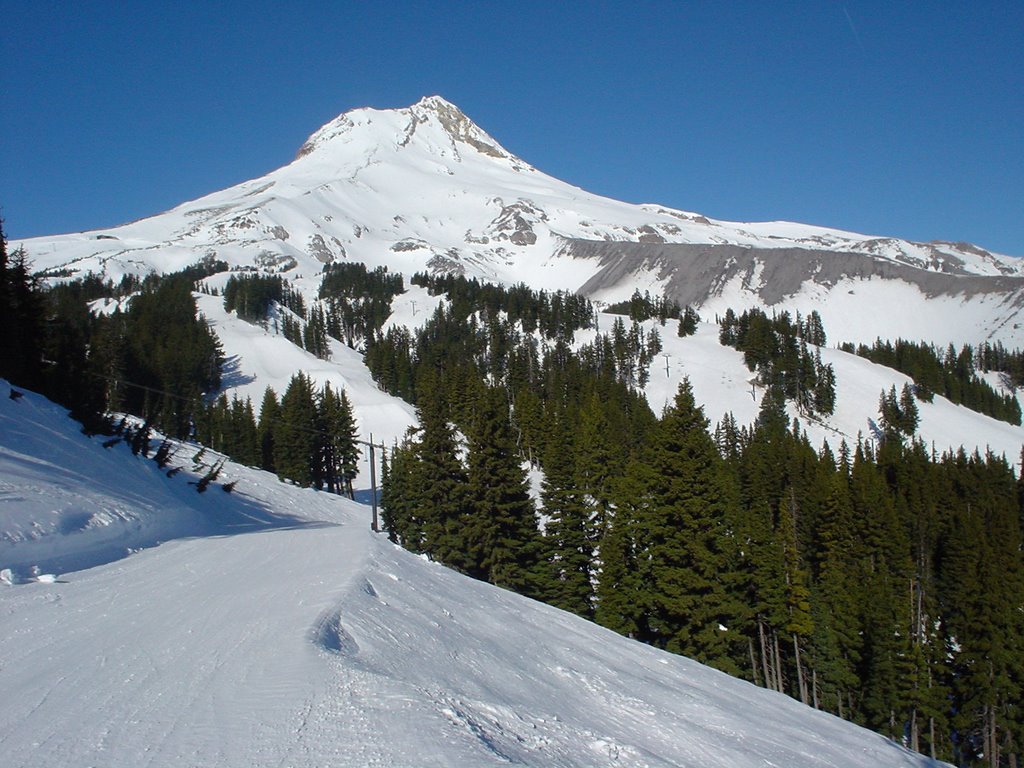
So today I went skiing at Mt. Hood. I'm sure you have been hearing about Mt. Hood because stupid people have been getting lost up there for the past few months. Not wanting to get lost I decided to not try to climb to the very top in the middle of a whiteout snowstorm but instead just went skiing. The photo shows what I would have been looking at if it weren't for the 12" of fresh that was cloging my goggles on every turn. Tomorow I'm going snowboarding instead. Still, it's not hunting. Nobody made lunch and there was no wikki next to my chairlift. Only about 225 day to go untill next season. GBCH.

Sunday, February 18, 2007

They can't run from the Benelli


LONDON: Webbed feet run in Stumpy's family, but he's the first to have four of them.

A rare mutation has left the eight-day-old duckling with two nearly full-sized legs behind the two he runs on. Nicky Janaway, a duck farmer in New Forest, Hampshire, 95 miles (150 kilometers) southwest of London, unveiled the duckling to reporters on Saturday.
"It was absolutely bizarre. I was thinking 'he's got too many legs' and I kept counting 'one, two, three, four,'" Janaway said.


Stumpy would probably not survive in the wild, but Janaway, who runs the Warrawee Duck Farm in New Forest says he is doing well.
"He's eating and surviving so far and he is running about with those extra legs acting like stabilizers," Janaway said.

Friday, February 09, 2007

Wednesday, February 07, 2007

The quest begins.


Hunting season is over.

Today the HOY7 hunting team began our search for things we can legally kill other that ducks. This picture was taken in our quest to bring home the elusive Bigfoot or Sasquatch. They never go out of season. Unfortunately we did not see any signs of the creature but every time I was behind Fred G. I thought I smelled something like the stench reported to be a sign of their presence.

The quest continues.
GBCH